
FITNESS AND HEALTH
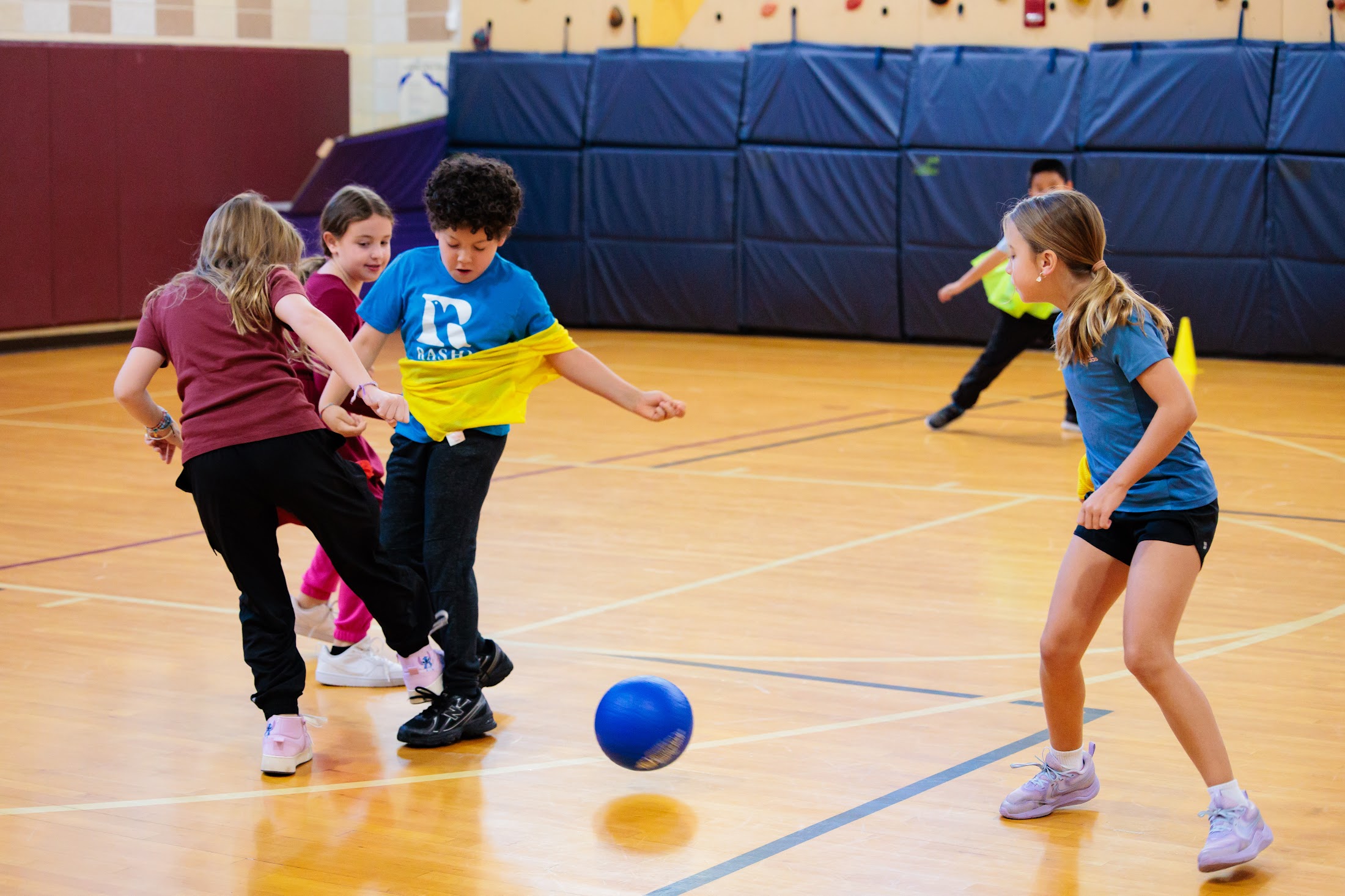
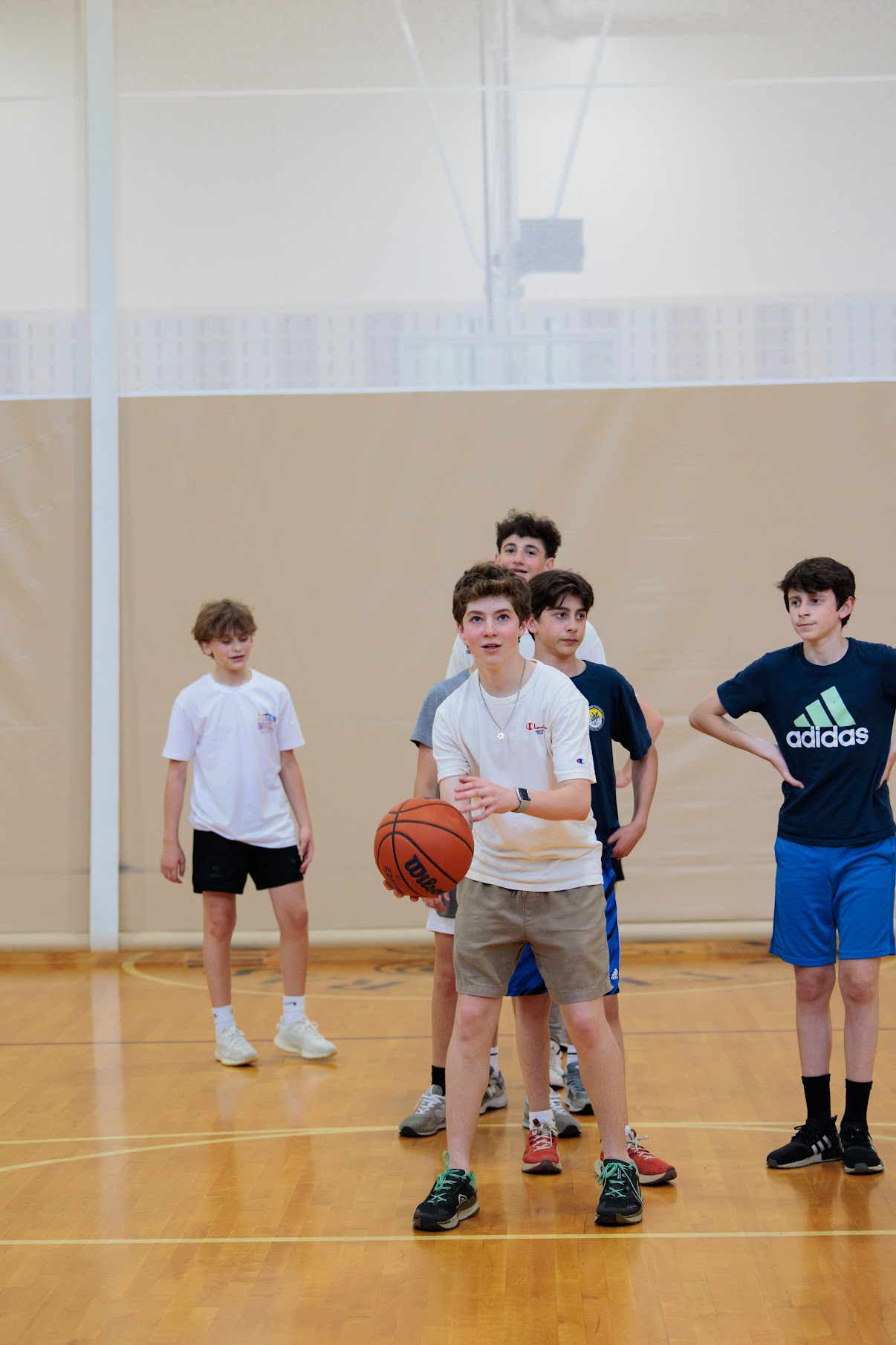
Fitness and Health are an essential part of the Rashi education. Rashi’s program offers a variety of traditional and non-traditional activities, from Zumba, to meditation, to basketball.
 Joshua Horowicz
Athletic Director
781-355-7327
jhorowicz@rashi.org
 Colin Bannen
Fitness & Health Teacher
781-355-7329
cbannen@rashi.org
Fitness & Health Curriculum
The purpose of the Rashi Fitness and Health program is to provide learning opportunities for students to develop skills, knowledge, and confidence, preparing them for life-long physical activity and health, filled with enjoyment, fulfillment, self-expression, and social interaction. Our K-2 classes are focused on movement and self expression while promoting safety and building community. Students engage in a variety of chasing and fleeing games, are introduced to manipulative ball games and enjoy many creative movement and fitness activities.
Kindergarten
The Kindergarten movement curriculum features a variety of games and activities to help students move their bodies and imaginations. They are natural and joyful movers, so the goal is to provide the structure for them to be safe and build community as they learn about fitness and movement concepts at an age appropriate level. Students will gravitate to different activities based on interest. Some love chasing and fleeing games, others lean towards manipulative ball games, and others particularly enjoy creative movement or fitness activities. It is our goal to provide every type of learner with the opportunity to find joy in movement and form the basis of a lifelong love of healthy activity.
Grade 1
Students progress towards mastering and adapting more complex manipulative and motor skills. The children learn the correct technique for fundamental skills and use them in performance. Students develop and practice sportsmanship, learning what it means to be a courteous winner or loser. They explore the twelve health and skill related components of physical fitness: cardiovascular strength, body composition, flexibility, muscular strength, muscular endurance, speed, agility, balance, coordination, reaction time, and power.
Grade 2
Students progress towards mastering and adapting more complex manipulative and motor skills. The children learn the correct technique for fundamental skills and use them in performance. Students develop and practice sportsmanship, learning what it means to be a courteous winner or loser. They explore the twelve health and skill related components of physical fitness: cardiovascular strength, body composition, flexibility, muscular strength, muscular endurance, speed, agility, balance, coordination, reaction time, and power.
Grade 3
Students progress towards mastering and adapting more complex manipulative and motor skills. The children learn the correct technique for fundamental skills and use them in performance. Students develop and practice sportsmanship, learning what it means to be a courteous winner or loser. They explore the twelve health and skill related components of physical fitness: cardiovascular strength, body composition, flexibility, muscular strength, muscular endurance, speed, agility, balance, coordination, reaction time, and power.
Grade 4
The physical education curriculum focuses on a variety of large- and small-group games and cooperative activities that use sport-specific skills as students prepare for team sports. Children are coached towards understanding the importance of developing a healthy, active lifestyle. Fourth graders are expected to strive for personal improvement, to cooperate with classmates, and to respect the spirit and rules of fair play.
Grade 5
The physical education curriculum in Grade 5 places emphasis on the development of movement skill combinations and awareness within the structures of both individual and team sports. Character education, critical thinking, and teamwork support student growth. Fifth graders are encouraged to use and expand their skills and strategies as they transition towards participation in interscholastic sports.
Grade 6
In addition to building upon the core components of fitness through cooperative activities promoting physical competence and character development, the goal of the Middle School curriculum is to help students increase their desire to learn new skills and to inspire them to engage in physical pursuits on a life-long basis. Students are encouraged to take more responsibility for their own personal fitness and to manage their own games and activities. They have the opportunity to participate in weekly electives designed to encourage a personal commitment to fitness and health. Choices include hiking, Zumba, indoor games, field games, and various team sports.
Grade 7
In addition to building upon the core components of fitness through cooperative activities promoting physical competence and character development, the goal of the Middle School curriculum is to help students increase their desire to learn new skills and to inspire them to engage in physical pursuits on a life-long basis. Students are encouraged to take more responsibility for their own personal fitness and to manage their own games and activities. They have the opportunity to participate in weekly electives designed to encourage a personal commitment to fitness and health. Choices include hiking, Zumba, indoor games, field games, and various team sports.
Grade 8
In addition to building upon the core components of fitness through cooperative activities promoting physical competence and character development, the goal of the Middle School curriculum is to help students increase their desire to learn new skills and to inspire them to engage in physical pursuits on a life-long basis. Students are encouraged to take more responsibility for their own personal fitness and to manage their own games and activities. They have the opportunity to participate in weekly electives designed to encourage a personal commitment to fitness and health. Choices include hiking, Zumba, indoor games, field games, and various team sports.