
It’s hard to look at a Drinking Bird and imagine that it could become a serious science investigation. It’s a little glass bird that dips its beak into a cup of water, tips forward, pops back up, and starts all over again. It looks almost too simple to be interesting. But when you ask students to explain exactly why it happens, there is more going on than meets the eye.
At Rashi, we begin Grade 8 science with a simple challenge in our biochemistry unit: Explain the Drinking Bird.
Students observe the bird and develop their own ideas about what is causing it to move. As they investigate, they encounter concepts including evaporation, temperature and pressure, and changes of state. They start to think about how what they can see relates to what is happening at the molecular level.
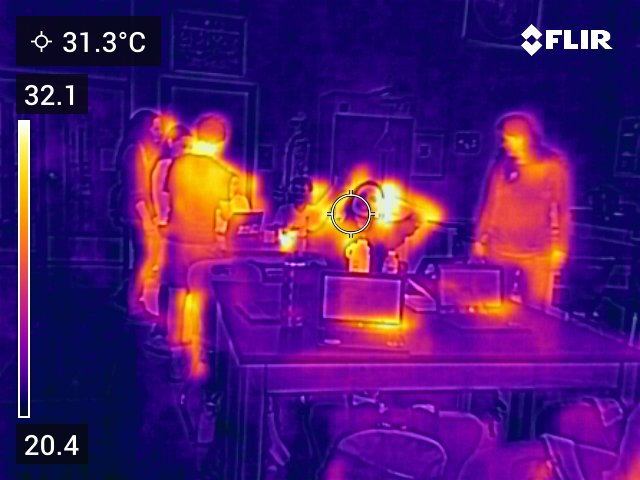
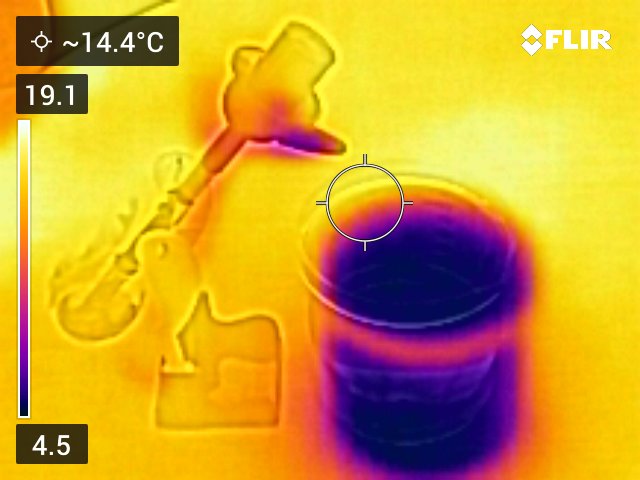
We also use an infrared camera to look at the Drinking Bird in a different way. The thermograph shows differences in temperature across the bird and its environment, making patterns that we can’t see with our eyes visible on the screen. This gives students another piece of information to consider as they work out how the bird moves.
Once students have spent some time figuring out how the bird works, we turn the question around: What could you investigate for yourself?
Working in groups, students design their own Drinking Bird experiments. They might investigate whether the type of fluid affects the bird’s speed or how changing a particular condition affects its motion. Together, they decide what question to investigate, what variable to change, and what they will measure while keeping other conditions consistent. Students then use their data to make a claim and explain how their evidence supports their conclusion. Sometimes the results raise new questions or lead students to think about how they could improve their experiment or investigate a different variable.
The goal is not just to get an answer, but to keep asking questions about what the data show and what we could find out next. This is where the Drinking Bird connects to the rest of the year. At its core, science is the process of figuring things out: What is happening? What evidence do I have? How could I find out more? The content will change as students move from biochemistry to genetics and neuroscience, but they will continue to practice the same basic process: making observations, asking questions, designing investigations, analyzing data, and using evidence to explain their thinking.
That confidence and independence are exactly what we want our students to carry with them, not only through Grade 8 science, but into high school and beyond.